

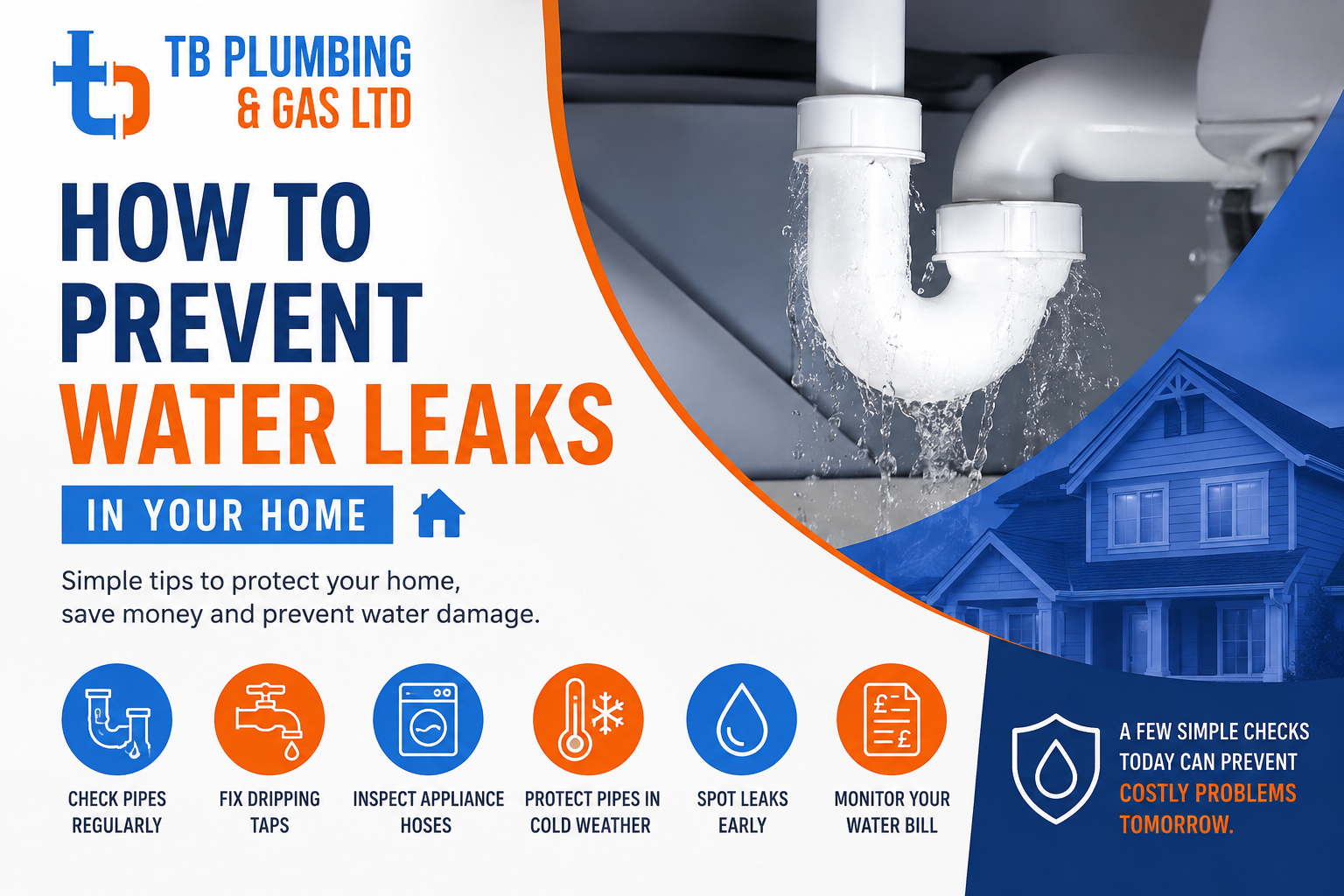
Water leaks are one of the most common causes of damage in homes. What starts as a small drip from a pipe, tap or appliance can quickly lead to damp, mould, damaged flooring, ruined ceilings and costly repairs.
The good news is that many household water leaks can be prevented with a few simple checks and regular maintenance.
In this guide, we’ll explain how homeowners can prevent water leaks, spot the early warning signs of a plumbing problem and reduce the risk of serious water damage.
1. Know Where Your Stopcock Is
One of the most important things every homeowner should know is the location of their main water stopcock.
If a pipe bursts or a major leak occurs, turning off the water supply quickly can dramatically reduce the amount of damage caused.
Your internal stopcock is commonly found:
* Under the kitchen sink
* Beneath the stairs
* In a utility room
* In a downstairs cupboard
* Near where the main water pipe enters your property
Make sure everyone in your household knows where it is and how to turn it off.
Top tip: Check your stopcock occasionally to make sure it hasn’t seized. You don’t want to discover that it won’t move when you have an emergency.
2. Check for Leaking Taps and Toilets
A dripping tap might seem harmless, but small leaks can waste a surprising amount of water over time and may indicate worn components that need attention.
Regularly check taps around your home for dripping or moisture around the base.
You should also check your toilets. A toilet can sometimes leak continuously into the bowl without being immediately obvious.
If you hear your toilet filling when nobody has used it, or notice constant movement in the water inside the bowl, it may need repairing.
3. Inspect Under Sinks Regularly
The cupboards underneath kitchen and bathroom sinks are easy places for small plumbing leaks to go unnoticed.
Every few weeks, take a quick look underneath your sinks and check for:
* Water droplets
* Damp patches
* Water stains
* Corrosion around pipe joints
* Musty smells
* Swollen or damaged cupboards
Finding a small leak early can prevent it from becoming a much larger problem.
4. Keep an Eye on Your Water Pressure
High water pressure can place unnecessary strain on your home’s plumbing system, including pipes, taps, valves, appliances and flexible hoses.
Over time, excessive pressure may increase the likelihood of leaks or plumbing failures.
If your water pressure seems unusually strong, changes suddenly or you hear banging noises from your pipes, it’s worth having your plumbing system checked by a qualified professional.
5. Check Washing Machine and Dishwasher Hoses
Washing machines and dishwashers are common sources of household water leaks.
The hoses behind these appliances can deteriorate, loosen or split over time.
Periodically inspect the connections and look for:
* Cracks in hoses
* Bulging
* Rust or corrosion
* Dampness around connections
* Slow drips
If a hose looks damaged or worn, don’t wait for it to fail completely — arrange for it to be replaced.
6. Protect Your Pipes During Cold Weather
During winter, exposed pipes can freeze. When water freezes, it expands and can put significant pressure on the pipe.
This can result in a burst pipe, sometimes only becoming apparent once the pipe begins to thaw.
To help prevent frozen and burst pipes:
* Insulate vulnerable pipes
* Keep your home adequately heated during cold weather
* Pay particular attention to pipes in lofts, garages and other cold spaces
* Repair dripping taps
* Know how to isolate your water supply
If you’re leaving your home empty during winter, take additional precautions to protect the plumbing system.
7. Don’t Ignore Damp Patches
A damp patch on a wall or ceiling should never be ignored.
Even if you can’t see dripping water, there could be a leaking pipe hidden behind the surface.
Other warning signs of a hidden water leak include:
* Peeling or bubbling paint
* Discoloured ceilings
* Mould growth
* Musty smells
* Warped flooring
* Unexplained dampness
* The sound of running or dripping water
The earlier the source of the leak is identified, the better your chances of limiting damage.
8. Pay Attention to Your Water Bill
An unexpectedly high water bill can sometimes indicate a hidden leak.
If your water usage hasn’t changed but your bill suddenly increases, it’s worth investigating.
You can also use your water meter to help identify potential leaks. Turn off taps and water-using appliances and check whether the meter continues to register water usage.
If it does, you may have a leak somewhere within the property.
9. Check Your Boiler and Heating System
Leaks don’t only come from taps and water pipes.
Boilers, radiators and central heating pipework can also develop leaks.
Watch for:
* Water underneath your boiler
* Regular drops in boiler pressure
* Dampness around radiators
* Corrosion around radiator valves
* Water marks near heating pipes
Boiler problems should always be investigated by an appropriately qualified engineer.
10. Check Baths and Showers for Failed Sealant
Not every water leak comes from a damaged pipe.
Failed silicone sealant around baths and showers can allow water to escape behind tiles, flooring and walls.
Over time, this can cause significant hidden damage.
Check the sealant around baths, showers and sinks. If you notice cracks, gaps, mould or sections pulling away from the surface, it may need replacing.
11. Don’t Ignore Small Plumbing Problems
One of the easiest ways to prevent serious water damage is to deal with plumbing problems while they’re still small.
A minor drip today could become a significant leak tomorrow.
If you notice unusual noises, damp patches, dripping pipes, falling boiler pressure or unexplained water usage, investigate the problem rather than waiting to see whether it gets worse.
What Should You Do If You Discover a Water Leak?
If you find a significant leak in your home:
1. Turn off the water supply using your internal stopcock.
2. Switch off affected appliances if it is safe to do so.
3. Keep water away from electrical fittings and sockets.
4. Contain the water with towels, buckets or containers where possible.
5. Contact a qualified plumber to locate and repair the problem.
If water is close to electrical equipment, wiring, sockets or your consumer unit, prioritise safety and seek professional assistance.
Regular Maintenance Can Save You Money
Water leak prevention doesn’t need to be complicated.
Spending a few minutes checking your plumbing, appliances, bathrooms and heating system can help you catch problems before they cause extensive damage.
Remember: small leaks rarely fix themselves.
If you notice dripping water, unexplained damp, unusual water usage or signs of a hidden plumbing leak, getting the problem investigated early could save you from much more expensive repairs later.
Need Help With a Water Leak?
If you’ve discovered a leak or you’re concerned about the condition of your home’s plumbing, professional help can identify the source of the problem and recommend the appropriate repair.
Don’t wait for a small leak to become a major problem. Early detection and repair can protect your home, reduce water waste and help prevent costly water damage.
Want something similar? Call 07530 994829 or request a free quote.